
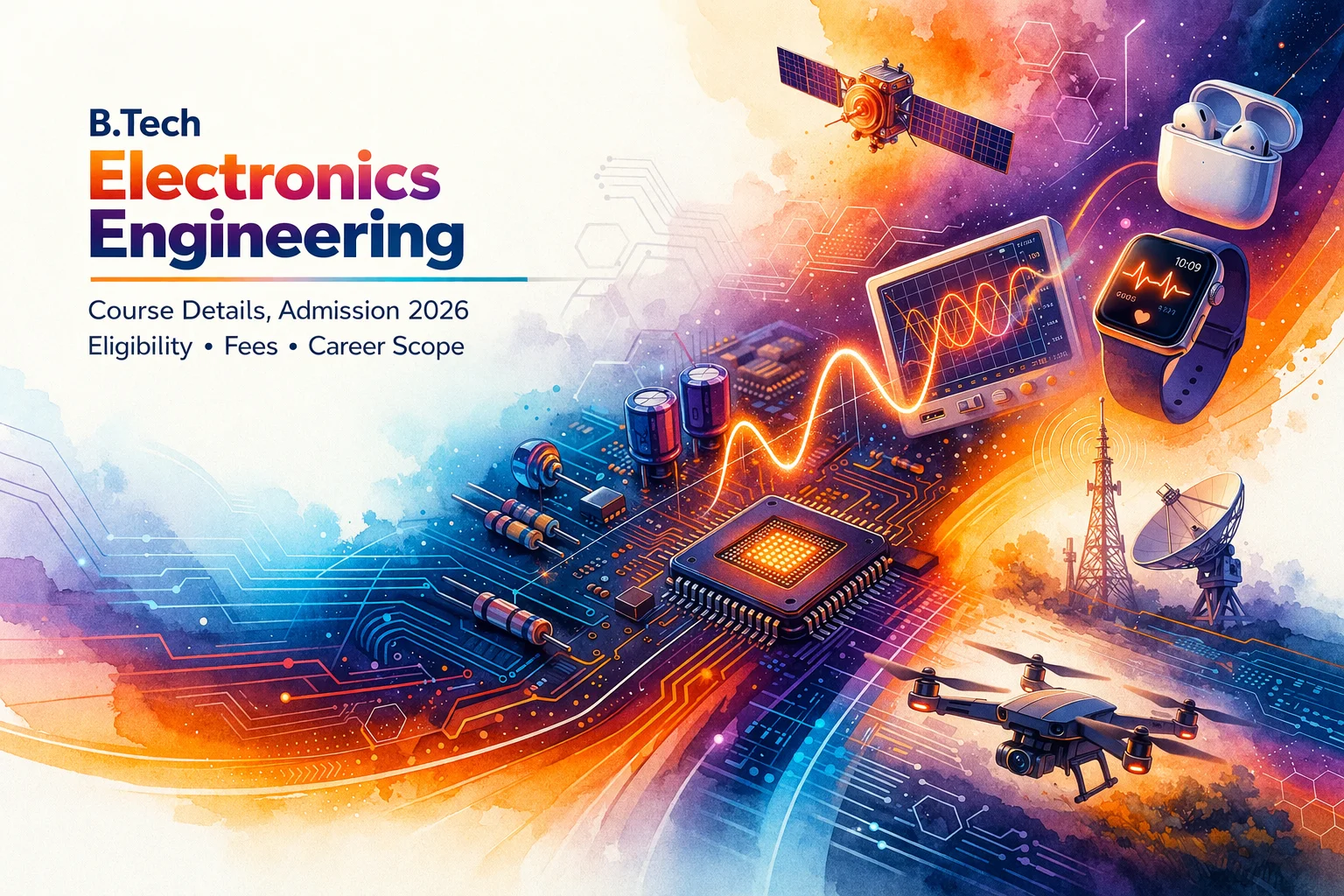
The demand for electronics and communication technology is growing rapidly across industries such as telecommunications, consumer electronics, automation, and space technology. With the rise of smartphones, IoT devices, AI systems, and 5G networks, the need for skilled electronics engineers is increasing globally.
Electronics Engineering is a core branch of engineering that focuses on designing, developing, and maintaining electronic systems and devices. These include communication systems, embedded systems, circuits, and semiconductor technologies.
The B.Tech Electronics Engineering course is a four-year undergraduate program that provides a strong foundation in electronics, communication, and modern technological systems. This guide explains B.Tech Electronics Engineering course details, admission 2026, eligibility, fees, and career scope to help students build a successful career in the engineering field.
Table of Contents
B.Tech Electronics Engineering Full Form
B.Tech Electronics Engineering stands for Bachelor of Technology in Electronics Engineering. It is an undergraduate engineering degree focused on electronic systems, circuits, and communication technologies.
Role of Electronics Engineering Professionals
Electronics engineers design and develop electronic equipment and systems used in various industries.
Their responsibilities include:
- Designing electronic circuits and systems
- Developing communication devices and networks
- Working on embedded systems and microprocessors
- Testing and maintaining electronic equipment
- Improving system performance and efficiency
- Supporting automation and smart technologies
They work in industries such as telecommunications, manufacturing, IT, defense, and research organizations.
B.Tech Electronics Engineering Course Structure in India
The B.Tech Electronics Engineering course combines theoretical learning with practical training and project-based experience.
Course Duration
| Component | Duration |
| Academic Study | 4 Years (8 semesters) |
The program includes classroom lectures, laboratory work, internships, and final-year projects.
Academic Learning Phases
The B.Tech Electronics Engineering curriculum can be divided into three phases.
Foundation Phase
Duration – First Year
Major Subjects
- Engineering Mathematics
- Engineering Physics
- Basic Electrical Engineering
- Programming Fundamentals
- Engineering Mechanics
Key Learning Objectives
This phase builds a strong base in mathematics, physics, and basic engineering concepts. Students understand fundamental principles required for electronics and technical problem-solving.
Core Electronics and Communication Phase
Duration – Second and Third Year
Major Subjects
- Analog Electronics
- Digital Electronics
- Signals and Systems
- Microprocessors and Microcontrollers
- Communication Systems
- Control Systems
Key Learning Objectives
Students learn about electronic circuits, signal processing, and communication systems. This phase focuses on developing technical expertise in designing and analyzing electronic systems.
Advanced Specialization and Application Phase
Duration – Final Year
Major Subjects
- VLSI Design
- Embedded Systems
- Wireless Communication
- IoT Systems
- Robotics and Automation
Key Learning Objectives
This phase focuses on advanced technologies and real-world applications. Students work on projects, research, and industry-relevant skills required for professional roles.
Practical Training and Industry Exposure
Practical learning is an essential part of the B.Tech Electronics Engineering course.
Laboratory and Practical Training
Students learn:
- circuit design and simulation
- PCB design
- programming for embedded systems
- hardware testing and troubleshooting
Industry Exposure
Students gain experience in:
- electronics manufacturing companies
- telecom industries
- research labs
- automation industries
Internship Training
Most programs include internships that allow students to work with industry professionals and gain real-world experience.
B.Tech Electronics Engineering Admission 2026
Admission to the B.Tech Electronics Engineering course is based on entrance exams or merit.
Common Entrance Exams
Many private universities also offer direct admission based on Class 12 performance.
Step-by-Step Admission Process
Step 1: Check Eligibility
Ensure you meet the eligibility criteria.
Step 2: Apply for Entrance Exams
Register for national or state-level exams if required.
Step 3: Fill Application Form
Apply to colleges with the required documents.
Step 4: Merit List / Entrance Result
Wait for results based on exam scores or marks.
Step 5: Counselling
Participate in counseling and choose your college.
Step 6: Admission Confirmation
Verify documents and pay fees.
B.Tech Electronics Engineering Eligibility Criteria 2026
Educational Qualification
Students must complete 12th grade with Physics, Chemistry, and Mathematics (PCM) from a recognised board.
Minimum Marks
- 50% to 75% aggregate marks, depending on the college
Age Criteria
- Minimum age: 17 years
B.Tech Electronics Engineering Fees Structure
Fee Overview
| Type of College | Annual Fees |
| Government Colleges | ₹50,000 – ₹1,50,000 |
| Private Colleges | ₹1,50,000 – ₹4,00,000 |
The total course fees can range from ₹2 lakh to ₹10 lakh, depending on the institution.
Additional Costs
- hostel fees
- lab charges
- project expenses
Career Opportunities After B.Tech Electronics Engineering
The career after B.Tech Electronics Engineering offers diverse opportunities across industries.
Top Job Roles
- Electronics Engineer
- Embedded Systems Engineer
- Communication Engineer
- VLSI Design Engineer
- Network Engineer
- Robotics Engineer
Graduates can work in both core electronics and IT sectors.
Industries Hiring Graduates
- telecommunications
- consumer electronics
- semiconductor industry
- IT and software companies
- defense and space organizations
- automation and robotics industries
Higher Education Options
- M.Tech in Electronics Engineering
- M.Tech in VLSI / Embedded Systems
- MBA for management roles
- MS abroad
- Certifications in AI, IoT, and robotics
Salary Expectations
| Experience Level | Salary |
| Entry Level | ₹3 – ₹6 LPA |
| Mid Level | ₹6 – ₹12 LPA |
| Experienced | ₹15 LPA+ |
Essential Skills for Electronics Engineering Professionals
Technical Skills
- circuit design and analysis
- programming (C, Python)
- embedded systems development
- signal processing
- hardware-software integration
Soft Skills
- problem-solving
- analytical thinking
- teamwork
- communication skills
Conclusion
The B.Tech Electronics Engineering course is an excellent choice for students interested in technology, electronics, and innovation. It provides a strong technical foundation along with practical industry exposure. With the rapid growth of electronics, communication systems, and smart technologies, the career after B.Tech Electronics Engineering offers strong job opportunities in both core and emerging fields. Students who are passionate about building and understanding electronic systems can pursue this course for a rewarding and future-ready career.
Explore all our Engineering Branches and Fields
| Course | Link |
| B.Tech Aerospace Engineering | Click here |
| B.Tech Robotics Engineering | Click here |
| B.Tech Electronics Engineering | Click here |
| B.Tech Electrical Engineering | Click here |
| B.Tech Civil Engineering | Click here |
| B.Tech Mechanical Engineering | Click here |
| B.Tech Computer Science (CSE) | Click here |
| B.Tech Artificial Intelligence (AI) | Click here |
| B.Tech Mechatronics Engineering | Click here |
| B.Tech Chemical Engineering | Click here |
FAQs
What is B.Tech Electronics Engineering?
B.Tech Electronics Engineering is a 4-year undergraduate course that focuses on designing, developing, and maintaining electronic systems such as circuits, communication devices, and embedded systems.
What is the eligibility for B.Tech Electronics Engineering?
Students must complete 12th with Physics, Chemistry, and Mathematics (PCM) and secure at least 50–75% marks, depending on the college.
What are the entrance exams for B.Tech Electronics Engineering?
Common entrance exams include JEE Main, JEE Advanced, BITSAT, and state-level exams like MHT CET and WBJEE.
What subjects are taught in B.Tech Electronics Engineering?
Key subjects include analogue electronics, digital electronics, signals and systems, microprocessors, communication systems, and embedded systems.
What is the duration of the B.Tech Electronics Engineering course?
The course duration is 4 years, divided into 8 semesters, including practical training and project work.
What is the average fee for B.Tech Electronics Engineering in India?
The total course fees range from ₹2 lakh to ₹10 lakh, depending on whether the college is government or private.
What are the career options after B.Tech Electronics Engineering?
Graduates can work as electronics engineers, embedded systems engineers, VLSI designers, communication engineers, or robotics engineers.
What is the starting salary after B.Tech Electronics Engineering?
Freshers can expect a salary between ₹3 LPA to ₹6 LPA, which can increase significantly with experience and specialization.
Is B.Tech Electronics Engineering a good career choice?
Yes, it is a good career option due to high demand in industries like telecom, IT, robotics, and semiconductor technology.
Can Electronics Engineering students work in the IT sector?
Yes, many electronics engineering graduates work in IT roles such as software development, data analysis, and system engineering after learning programming skills.